(May 31, 2007) A joint ECA-Watch/FERN press release: On 23-24 April 2007, the OECD’s Export Credit Working Group (ECG) appears set to approve revised and weakened environmental and social standards governing projects supported by export credit guarantees or loans of greater than 10 million SDRs (US$15.3 million or 11.2 million).
Article 13 of the virtually final negotiating draft of these standards, known as the ‘Recommendation on Common Approaches on Environment and Officially Supported Export Credits’, allows export credit agencies (ECAs) to opt out of applying any standards at all, provided that they report this to the notoriously secretive and effectively unaccountable OECD working group.
 (March 14, 2007) Investment is not just a blandly apolitical process by which money is mysteriously made to grow, but a process in which companies and governments define and redistribute access to assets, determining who accumulates wealth and at whose expense. This book, by Kavaljit Singh, aims to educate us how investment works, who the main players are and what trends are emerging.
(September 15, 2006) This paper by Nick Hildyard of the Corner House gives recommendations on how to address deficiencies in current ECA policy with regard to consultation and participation and argues that affected communities and indigenous peoples must be recognized as rights holders in the decsion-making process.
 (28 February 2006) This paper by Susan Hawley of Cornerhouse analyes comments and recommendations made by the OECD’s Working Group on bribery on ECA practice in combating bribery. These were made during reviews (known as phase 2 reviews) of how OECD countries are implementing the OECD anti-bribery convention.
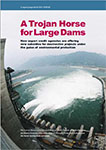 A Trojan Horse for large dams is a report prepared for ECA WATCH by: The Corner House, Environmental Defense, FERN, Friends of the Earth Japan, the Halifax Initiative, International Rivers Network, Probe International, and the World Development Movement. September 2005
(August 29, 2005) Export Credit Agencies (ECAs) have a long history of granting support for large dams in the South – often at great costs for the poorest sectors of society. The world’s most powerful ECAs have negotiated a special agreement within the OECD which will give dam builders additional subsidies to revive the hydro industry. In this report, FERN and The Corner House argue that privileged treatment for large dams must be conditional on projects complying with international best practice aiming at mitigating the negative impacts on people and environment.
ECA Watch campaign participants, reporting from an NGO strategy session held in London, December 6-7, 2002, organized by the Halifax Initiative (Canada), FERN (Belgium), Cornerhouse (UK), All Eyes on SACE/ CRBM (Italy) and The Kurdish Human Rights Project (UK).
This report gives an overview of human rights impacts of export credit-financed projects, ECAs and human rights impact assessments, and mechanisms for linking ECA investments more explicitly to human rights.
(30 June 1999) This report from Nicholas Hildyard of Cornerhouse examines export credit agencies, corporate welfare and policy incoherence.
Summary: Export Credit Agencies (ECAs) are publicly-backed government agencies that give financial guarantees to companies operating abroad. They are now the single largest source of taxpayer support for companies operating in the countries of the South and Eastern Europe. Projects backed by such export credit agencies — from dams to weapons to power stations — are frequently environmentally destructive, socially oppressive or financially unviable. It is the poorest in these countries who end up paying the bill. With rare exceptions, the major ECAs lack mandatory environmental and development standards, and are secretive and unaccountable.
